Did you know Pluto was discovered in Arizona? Yeah, we take it a little bit personally that poor Pluto has been demoted to dwarf planet.
Beyond the glowing light pollution of Phoenix, the mountain town of Flagstaff, Arizona has the perfect dark-sky environment for stargazing…and planet discovering.
Back in the early 1900s, when Great State 48 was still known as Arizona Territory and the Wild West was still in living memory, astronomer Percival Lowell built an observatory on a hilltop in Flagstaff. He spent the remainder of his life here, searching for the next great space discovery. First, he looked for canals on Mars that might prove the existence of water and life. When he didn’t find that, he searched instead for “Planet X,” a new planet he was sure existed at the edge of the solar system.
But it wasn’t until after Lowell’s death that Pluto made its dramatic debut into the world of astronomy. A Midwest farm boy and amateur space enthusiast named Clyde Tombaugh ended up discovering the planet after many cold nights of taking images on photo plates through the observatory’s cutting-edge telescope.
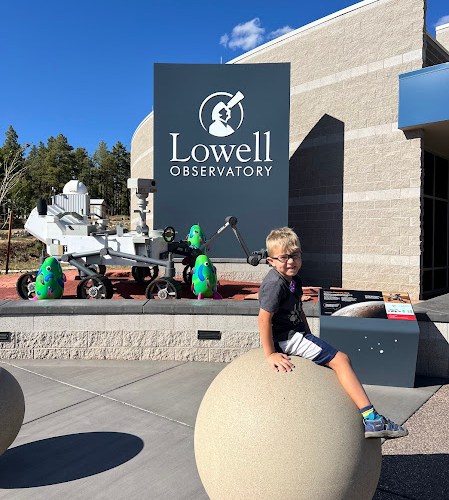
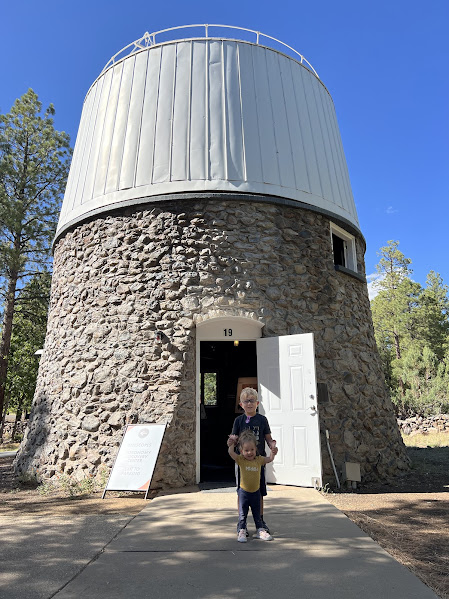
Visitors can still walk through the observatory to view the famous decades-old telescopes and the beautiful library of Percival Lowell. Recently, the museum has also added some fantastic displays and a children’s area to play and learn about astronomy.
We recently visited with friends, and everyone (ages 2, 4, 6, 12, 13, and two grown-ups) had an awesome time! If you’re ever passing through Flagstaff, be sure to take some time to stop and learn something new about space and Arizona history.
Most of the Wild West is a myth. This is something I did not realize until I was 25, and I was disappointed to find that out!
However, the truth is often stranger than fiction.
Imagine a hillside where Native Americans once obtained ore for decorative use, where the winds in the heights cool the simmering desert temperatures. Prospectors came looking for copper, and they found gold–enough gold to attract 15,000 dreamers, investors, and liars from all over the world.
For decades, the town grew until it was one of biggest towns in Arizona Territory. It developed a reputation as the wickedest town in the West, too. Shootings, hangings, and violence of all types thrived among the bordellos and bars. The dusty earth kept producing gold, and the region’s mines boomed and multiplied.
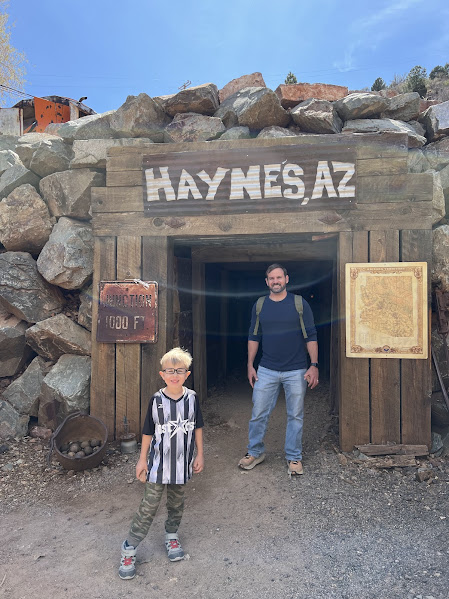
Bbut by the 1950s, the town was dying. Nearby Gold King Mine in Haynes, AZ, a mile away, had gone under in the 1920s, and now the gold had run out in Jerome, too.
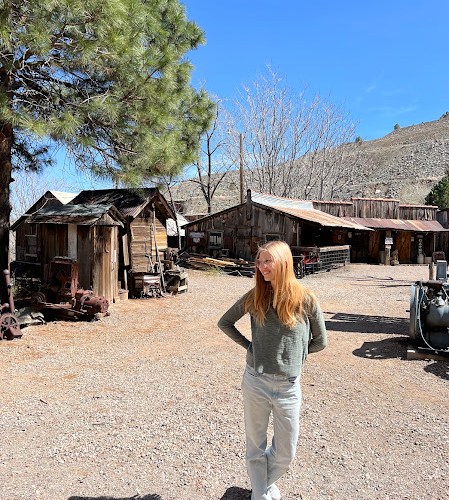
Still, the few remaining residents, less than 100 now, kept the town alive. By the end of the century, the wickedest town in the West had a new shtick: Arizona’s newest ghost town. Supposedly complete with real ghosts.
The rugged beauty of the desert, nearby ancient ruins, and remote solitude of Jerome attracted creatives, and eventually the town became home to a population of artists, whose work and whimsical lifestyle turned the town into a popular tourist attraction. Today, 400 people call the town home, and hoards of visitors support the life of this old town that refuses to die.
We visited Jerome and Gold King Mine with our kids, and my six-year-old was determined to come home with gold. I was pretty sure he wouldn’t, but guess what? That kid was right. He emerged from the ghost town with a vial of genuine gold dust, proving that dreams still come true in Jerome, Arizona.
Last month, I asked my newsletter subscribers what they would like to see on this blog. The most popular response was “More Arizona adventures!” You spoke, I listened.
I thought I’d start out a series on Arizona adventures by sharing a recent excursion that reflects Arizona’s history, culture, and economy: Arizona Mining Day at the Capitol.
Every Arizona grade schooler learns the “5 Cs” of Arizona’s economy: “Cotton, Copper, Canyon, Citrus, and Climate.” Local lore abounds with stories of gold miners, and the Gold Rush is perhaps the most romantic (or maybe just most romanticized) aspect of our Wild West legends. However, copper is the real asset for modern Arizona, thanks to its abundance and uses, and the copper industry employs a huge slice of Arizonans.
Mining Day at the Capitol is an annual affair at on the capitol building lawn. Dozens of industry professionals set up booths to represent their companies, mainly to remind lawmakers how essential the industry is (“If it can’t be grown, it must be mined!”) and also to educate school groups and the general public about mining and the many roles that exist.
The popular imagination sees miners as grizzled old men hunkered down on a mining claim, pickaxe in hand. But modern mining requires much more technology and ingenuity. My dad’s role, for example, is in land management. He spends his time on everything from GIS technology to negotiating deals with cattle ranchers to forest conservation. A friend from church works in the same company in an IT role. Engineers, construction workers, farmers, and more all have a place in harvesting the metals required to operate your phone, car, and appliances.
During Mining Day, my family browsed from booth to booth, watching chemistry demonstrations, snagging cool swag, and hearing about upcoming projects. One of the tables offered copies of a slim textbook on the history of mining. I grabbed one, partially for book research and partially just out of curiosity. Immediately, the words and vintage photos swept me back into a brief and bygone era filled with intrigue, mysterious disappearances, lost fortunes, and handlebar-mustachioed men who longed for the West and gold.
As the perceptive Arizona adventurer knows, century-old mine shafts dot the desert and old wooden buildings molder in the mountains above busy open-pit mines. Arizona’s modern mining industry may be a well-oiled machine run by men and women of science and skill, but echoes from the past remind us of ghost towns that held the dreams of a generation.
We just spent a month in Africa! My husband’s family has lived there since the 1940s, and we took a long trip to visit grandparents, aunts, uncles, and cousins in Tanzania and Burundi.
If you’ve been following me for a bit, you know that my 21-month-old daughter has several health concerns. When she was first diagnosed, we believed our days of international travel were over. But as she’s grown, her medical needs have stabilized significantly. And it was high time she met her paternal grandparents and many of her other extended family members!
Here are a few of the things we saw and did:
Gisuru School for the Deaf and Ephphatha School for the Deaf
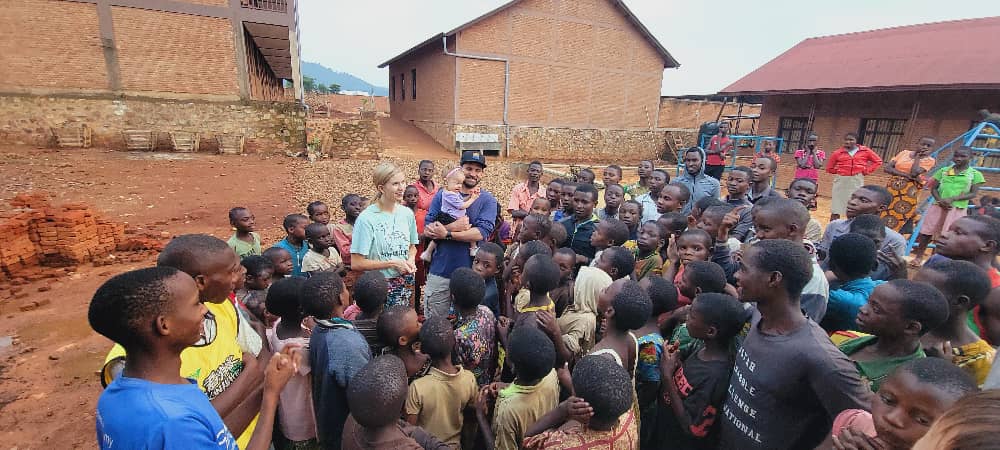
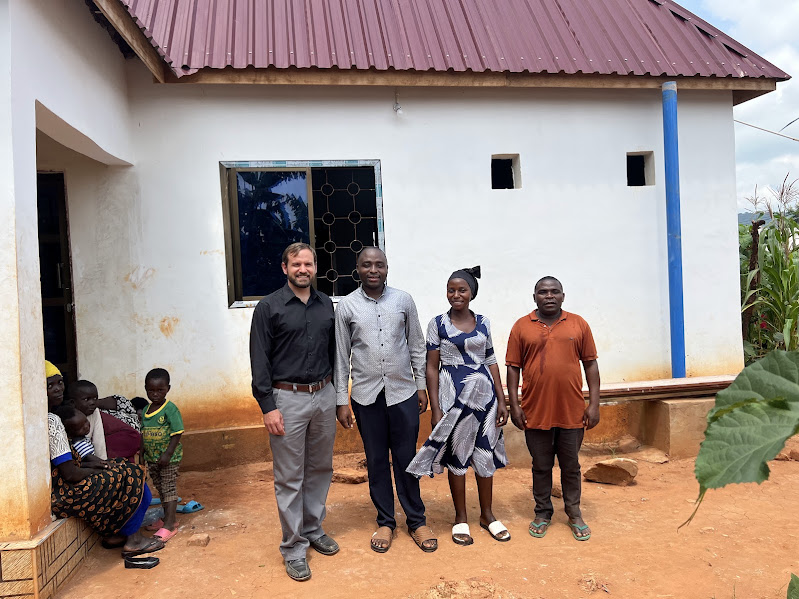
We started our trip visiting the village of Gisuru, which is in rural Burundi. My brother-in-law started Gisuru School for the Deaf to meet the needs of the uncommonly large Deaf population in Burundi.
We took Baby Bee down to visit a few times, and as you can see, everyone wanted a chance to meet the little deaf American baby! She was even given a name sign, which I’d been hoping for. We also got to chat with both of the students we sponsor.
Little Man’s not in this picture, but he spent many hours at the school, helping make bread. The school has a bakery as part of its trade program.
When we visited the capital city on the other side of the country, we got to visit Burundi’s other school for the deaf. Ephphatha School for the Deaf was started by in-laws a few decades ago, and now is it one of many projects that Ben’s other brother and his wife oversee. Currently, they are working on developing the school’s new campus.
These are boarding schools serving impoverished rural families. You can support the mission by sponsoring a student:
My sister-in-law runs an English-language private school in Bujumbura, Burundi. The school takes a critical-thinking approach to education, which sets them apart. One of their main goals is to equip Burundi’s future leadership to lead well and navigate the global marketplace effectively. They celebrated their first graduating class three years ago.
Discovery School is currently working on opening a branch near a rural hospital a few hours away. This school will help to attract and retain medical professionals, since many hospital employees have decided to leave their work due to lack of schools in the area.
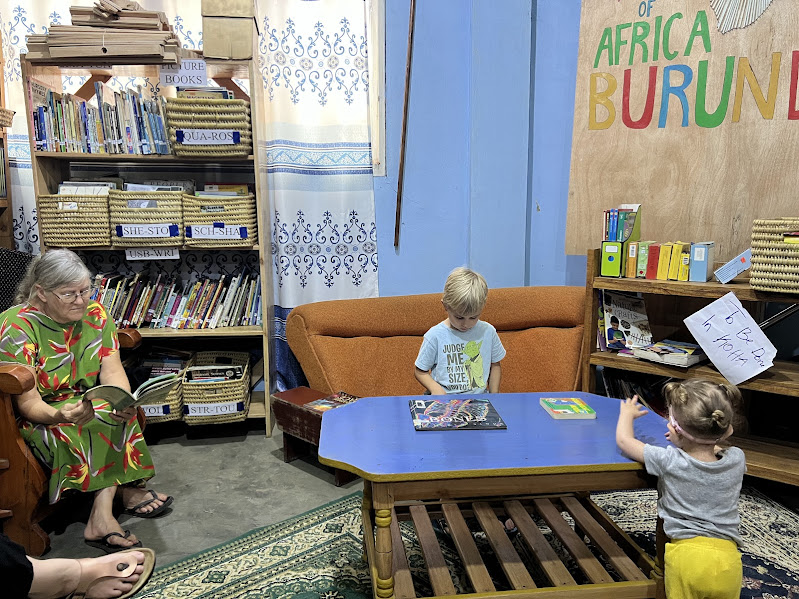
Little Man loved the library–I believe it’s the biggest school library in the country!
See photos of the school and learn how you could get involved here:
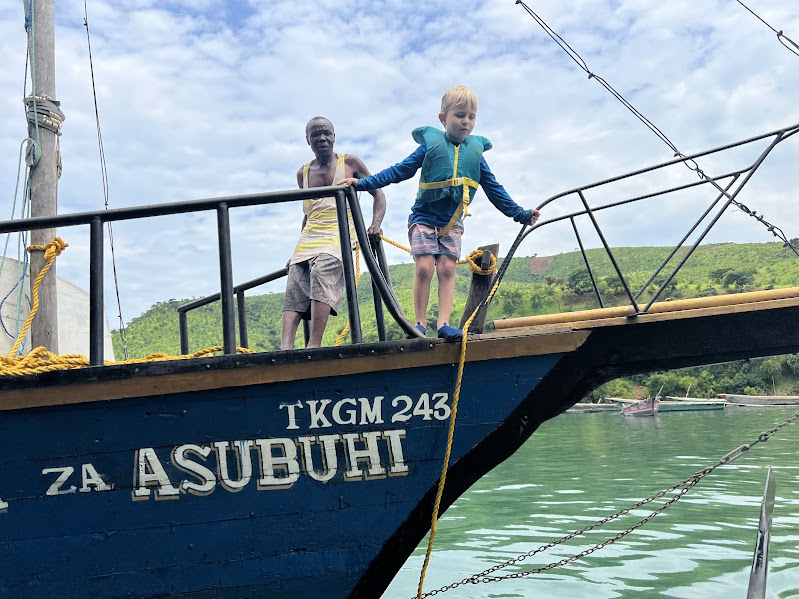
We stayed with Ben’s parents for a week. They have recently retired and moved into a lovely home overlooking Lake Tanganyika. Grandpa’s boat is a lot of fun for lake trips, but it’s also a ministry tool. He uses the boat to minister to communities all along the lake, some of which are impossible to reach by road.
While in Tanzania, we also enjoyed time with Ben’s childhood friends and the family of another of his brothers (yes, Ben has a LOT of brothers!), who does pastoral training etc. in Tanzania.
Kanura School for the Blind
My father-in-law opened this school for the blind in the 1980s. It’s currently under the leadership of Burundian nationals, some of whom are blind graduates of this school. Kanura is also open to sighted children, which furthers the goal of destigmatizing disabilities.
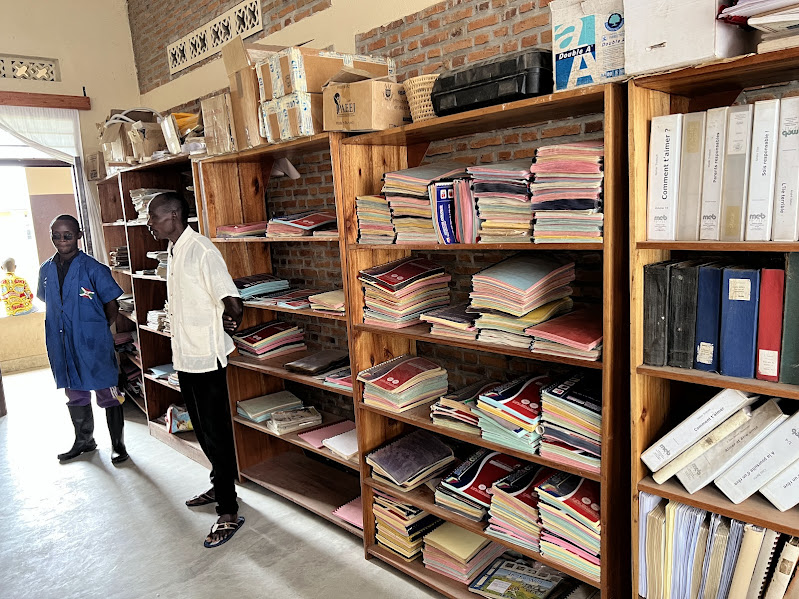
It was cool to see how the school has adapted their curriculum to work for the students. Some of the classrooms displayed textured posters, like yarn and beans glued to graphics of the digestive system so kids can feel it it and understand as they learn. We also came across several students playing musical instruments, and I was excited to see their braille library, including braille printers and adaptive computer programs that allow them to create more literature.
Ben built this lab in a rural village in Tanzania. His friend, also named Benjamin, is a pharmacist and will hopefully be opening his practice here within the next year. It was cool to see the finished building in person.
Besides visiting these projects and schools, we had a great time with family. Little Man got to hang out with seven of his cousins, and everyone loved playing with Baby Bee, too. She made a lot of progress and thrived in this new setting. It was a good month!
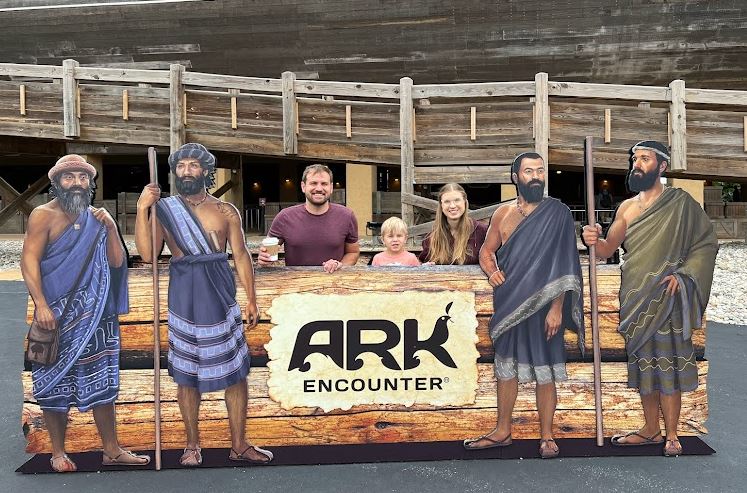
Have you ever wondered what Noah’s Ark really looked like? Well, travel to Kentucky (of all places), and you’ll get a pretty good idea. The Ark Encounter, a project of Answers in Genesis, is a life-sized ark based on the dimensions listed in the Bible.
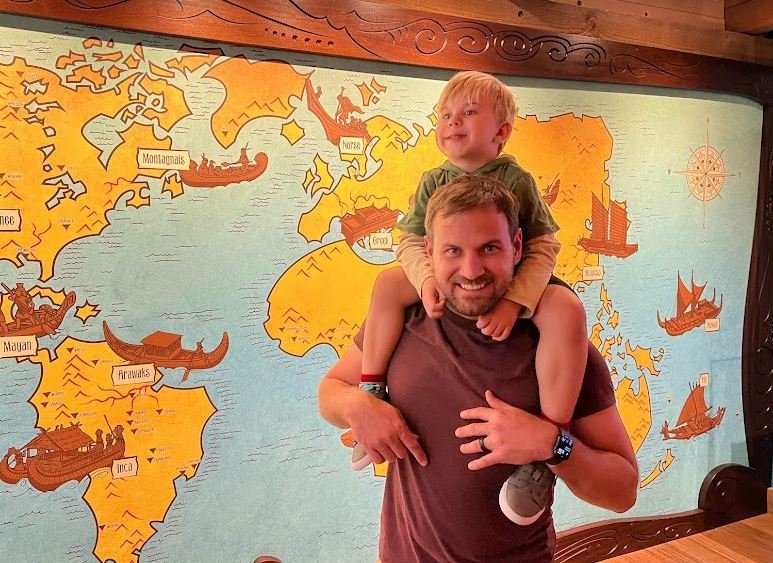
Using the theory that that each pair of animals represented one “kind,” they filled the ark with models of these creatures based on prehistoric fossils. There are also several displays within the ark, including an exhibit provided by the Bible Museum and one that shares flood legends around the world.
It’s a little bit museum and a little bit theme park, which appealed to my five-year-old who loves science. Our visit to the Ark Encounter was an awesome experience for our whole family, from my parents (who brought us!) to my kids.
Judging by the major crowds at the Ark on the Saturday we visited, this is a popular destination. Perhaps this is, in part, because children’s tickets are free. The venue also hosts conferences and concerts–the day we visited, there was live music by a well-known Christian band included with the price of a ticket. We didn’t attend because there was so much to see!
Definitely a fun trip and one I’ll repeat when my kids get older and mature enough to appreciate new things about the experience.
Mama Violette crafts these baskets using what my 11-year-old niece calls “goat rope” (rope made of fibers processed from sisal, a yucca-like plant), grass that grows near the river, and the plastic fiber from coffee sacks.
I asked Mama Violette where she learned to make these baskets. I expected a heartwarming answer about sitting long afternoons with her grandmother. However, she told me that she learned during her time in a refugee camp while Burundi was suffering through a civil war.
She takes apart the sacks and straightens the fibers. Most of them are white, but colorful plastic is also available for designs. The durable, waterproof plastic replaces traditional organic materials in most baskets I saw.
Recycling at its finest!
Mama Debo helped teach us to weave the baskets.
The basket starts with an inch or so of wrapping the plastic around the rope and grass. Coil the plastic-wrapped rope, thread the plastic through a needle, and stich the coil in place.
The rest of the basket is pretty simple–keep wrapping, putting a stitch through the last round each time. I noticed that Mama Debo and Mama Violette placed one stich evenly though each wrap on the coil below.
Making a basket takes a lot of time–a full day even for someone experienced. Later during our trip, I purchased a few small baskets from a roadside stand.
Can you guess how much one costs?
Two dollars. That’s all these women make from a day of hard work. That’s a typical wage for people in rural Burundi.
Mine wasn’t quite so neat, but it looked a lot better than my first attempt at a coil basket, which I tried to make with agave fibers from a plant in my yard. If you want to take a peek and laugh, visit this post.
One of my nieces added some color to her basket. I was endlessly impressed by her creativity and knack for crafting. Aside from her new skill of basketry, she actually processes “goat rope” from sisal herself, dyes it using natural pigments she makes from nature, and weaves them into bracelets.
Making a full basket would take a beginner like me days–even this little bit was the result of a couple of hours of work. So I decided to stop and turn it into a keychain.
Mama Violette helped me finish it off.
She and Mama Debo inspected my work, saying “Ni sawa.” I thought that meant I had not a fantastic job, but apparently it means. “That’s alright.” Hey, for a first attempt, I’ll take it!
Now, I carry around this little souvenir on my keys wherever I go!
However, my main takeaway from this project wasn’t a physical item, or even a new skill.
Even though I couldn’t have a conversation with Mama Debo or Mama Violette, they were content to sit on the porch with me and communicate however we needed to, patiently helping me learn each step of basketmaking. Despite the many differences in our lifestyles, experiences, and backgrounds, they did not make me feel like an outsider.
Instead, we enjoyed a project together, connecting over a shared interest.
No matter the differences between us, we have more in common than we might think.
If you look at a map of Africa, you might be surprised that it takes five hours to drive across the small country of Burundi. But Burundi is all hills and valleys, dirt roads and steep escarpments.
Kirundi word of the day: Murakozi (thank you)
This snapshot of rural Burundi does not do it justice
The rural town of Gisuru is across Burundi from Bujumbura, the big city with the country’s international airport. Ben’s brother Danny and his family made the drive to Bujumbura to pick us up and then brought us to Gisuru the next day. They did ten hours of driving between the two days!
For me, the five-hour trip was easy—everything I could see was interesting and new to me, so there was a lot to take in.
We stopped for lunch at a place the president frequents during his travels and even saw his motorcade.
Then we bumped along winding dirt roads for a couple of hours, the appearance of a rare car causing people to pause mid-hoe in the middle of their fields to watch us rumble by in a cloud of dust.
Sunset over Gisuru School for the Deaf
Finally, we arrived at Danny’s home, where my nieces and nephew gave us a tour of their various pets: guinea pigs, a rabbit, some lovebirds, a talking African grey parrot, and a pair of monkeys.
I couldn’t stop staring at the view. So much green! So much land! The house where we stayed overlooked not only the valley but also Gisuru School for the Deaf, which Danny established so the large population of Deaf kids in the area can learn sign language and have an education.
But I have yet to share the process from start to finish. Here’s what it takes for someone to travel from high school student to doctor.
High School in Kenya: Discovering His Calling
Ben’s interest in medicine started when he nearly died of spinal meningitis in Kenya during high school.
After graduating high school, Ben flew to the States with two bags and a couple hundred dollars in his pocket. He started college at Arizona Christian University.
As you may have noticed if you follow me on Instagram, I’ve been spending as much time as possible in and around the Superstition Wilderness this year! I love that area– the history and mystery, the natural landscape.
When I’m outside, I like to know the names of the plants I’m seeing and what they can be used for. Ben would probably like it if I would stop eating things I find in the wild, but if the apocalypse comes, I’ll be one of the few who knows how to prepare mesquite pods 😉
Boyce Thompson Arboretum
I’ve been doing a lot of plant research online, but it’s just not the same as getting out and learning about plants in person. So, for my birthday excursion, we headed to Boyce Thompson Arboretum, a huge garden of desert landscapes complete with hiking trail!
The arboretum is located at the foot of Picketpost Mountain (or, Piglet Wiglet Mountain, as my three-year-old has dubbed it), a formidable peak that is not possible to summit with a child and a dog. And yes, I know that from experience.
A natural stream runs through the gardens, bringing life to the desert landscape. However, you won’t just find Arizona’s flora here–there are also exhibits from desert environments all over the world!
Boojum trees are named after a word Lewis Carroll invented for The Hunting of the Snark
Why visit Boyce Thompson Arboretum?
If you’re in the East Valley region of the Phoenix Metro Area, the arboretum isn’t too far of a drive out of town. And it’s definitely worth it! Those who enjoy the Desert Botanical Gardens in Phoenix will love a getting a different angle on local vegetation.
Boyce Thompson Arboretum is a great activity for people of all ages and mobility levels. While not all the trails, including the loop trail, are accessible, you can see most of the gardens from paved paths.
Little ones will love the kid appeal in the children’s garden. It provides an opportunity to talk about shapes and colors.
Where’s your favorite place to explore the natural world? Do you like arboretums or just getting out in nature? Leave a comment and let me know!
I’ve been spending a lot of time thinking about Africa. For one thing, I’m writing a novel about an American kid in a Kenyan boarding school. For another, we’re planning on taking a trip to East Africa in the spring. Ben is allowed a residency rotation overseas, and obviously, he picked going home!
Ben near Lake Tanganyika in his hometown
It’s hard to believe we haven’t been to Africa since 2013! For someone like Ben, who grew up there, eight years is a long, long time to stay away. We were the only ones to miss the last family reunion, thanks to Ben’s med school schedule. And when you have 35 people in your immediate family (hope I added that right), living in six countries across three continents, it’s quite a bummer to mess up an opportunity to get a family photo where nobody’s photoshopped in.
Visiting a Burundian national park. Ben’s grandfather helped to start it after WWII.
Fortunately for Ben, even though it’s been a long time since he’s used Swahili on the daily, he does have frequent opportunities to use it at work. There are many people from Congo in our city, and whenever someone shows up to the hospital, Ben is able to conduct exams in a language they are more comfortable using. I, on the other hand, am getting pretty rusty. You know, rusty on the hundred or so words I actually know in Swahili. Looks like I have some work to do if I want to be able to practice any conversational skills at all while we’re there!
Swinging on vines – not just in movies!
We’re excited to go to Africa, introduce our son to the continent, and revisit the places Ben grew up. But one of the coolest things about this trip is that Ben will get to work at the very hospital where his life was saved, where he realized his calling into medicine. Over a decade ago, he was laying in one of the beds with a IV in his arm, recovering from spinal meningitis and watching the staff go about their daily tasks. He knew he wanted to use the second chance at life to pour into patients, just like those doctors and nurses. And now he gets to go back to the same hospital and do just that.
Lake Nakuru National Park in Kenya
Isn’t it amazing how God redeems our circumstances? Sometimes we never see how he does it, but other times life comes back full-circle and we can see how to worst days of our lives change us into the people we are supposed to be.
Just for fun, here are some of my favorite photos from our 2013 visit to Burundi, Kenya, and Tanzania.
Sailing Lake Tanganyika
Baboons (Ben calls them BADboons)
Overlooking the Rift Valley
Subbing at a Deaf school
Friends who helped with navigating the language barrier




 Breana Johnson