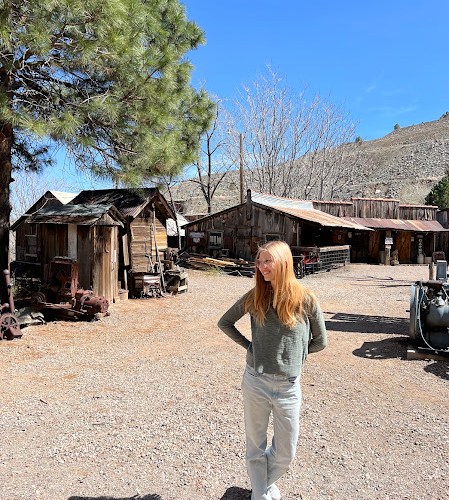
Gold King Mine in Jerome, Arizona

Living Legends: Jerome, Arizona

Uncategorized

Most of the Wild West is a myth. This is something I did not realize until I was 25, and I was disappointed to find that out!

However, the truth is often stranger than fiction.

Imagine a hillside where Native Americans once obtained ore for decorative use, where the winds in the heights cool the simmering desert temperatures. Prospectors came looking for copper, and they found gold–enough gold to attract 15,000 dreamers, investors, and liars from all over the world.

For decades, the town grew until it was one of biggest towns in Arizona Territory. It developed a reputation as the wickedest town in the West, too. Shootings, hangings, and violence of all types thrived among the bordellos and bars. The dusty earth kept producing gold, and the region’s mines boomed and multiplied.
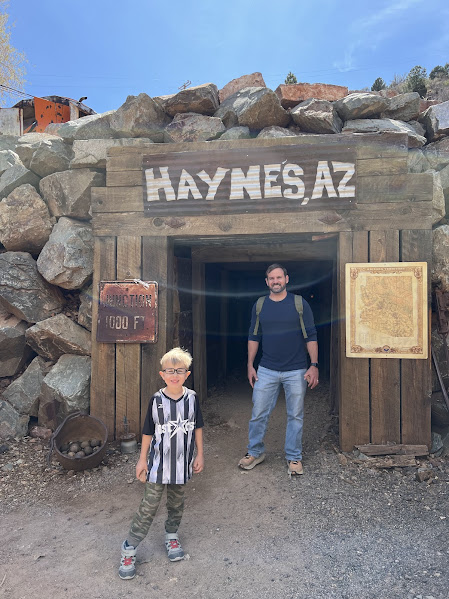
Bbut by the 1950s, the town was dying. Nearby Gold King Mine in Haynes, AZ, a mile away, had gone under in the 1920s, and now the gold had run out in Jerome, too.

Still, the few remaining residents, less than 100 now, kept the town alive. By the end of the century, the wickedest town in the West had a new shtick: Arizona’s newest ghost town. Supposedly complete with real ghosts.

The rugged beauty of the desert, nearby ancient ruins, and remote solitude of Jerome attracted creatives, and eventually the town became home to a population of artists, whose work and whimsical lifestyle turned the town into a popular tourist attraction. Today, 400 people call the town home, and hoards of visitors support the life of this old town that refuses to die.

We visited Jerome and Gold King Mine with our kids, and my six-year-old was determined to come home with gold. I was pretty sure he wouldn’t, but guess what? That kid was right. He emerged from the ghost town with a vial of genuine gold dust, proving that dreams still come true in Jerome, Arizona.

If it Can’t Be Grown…

arizona

….It must be mined.

Last month, I asked my newsletter subscribers what they would like to see on this blog. The most popular response was “More Arizona adventures!” You spoke, I listened.

I thought I’d start out a series on Arizona adventures by sharing a recent excursion that reflects Arizona’s history, culture, and economy: Arizona Mining Day at the Capitol.

Every Arizona grade schooler learns the “5 Cs” of Arizona’s economy: “Cotton, Copper, Canyon, Citrus, and Climate.” Local lore abounds with stories of gold miners, and the Gold Rush is perhaps the most romantic (or maybe just most romanticized) aspect of our Wild West legends. However, copper is the real asset for modern Arizona, thanks to its abundance and uses, and the copper industry employs a huge slice of Arizonans.

Mining Day at the Capitol is an annual affair at on the capitol building lawn. Dozens of industry professionals set up booths to represent their companies, mainly to remind lawmakers how essential the industry is (“If it can’t be grown, it must be mined!”) and also to educate school groups and the general public about mining and the many roles that exist.

The popular imagination sees miners as grizzled old men hunkered down on a mining claim, pickaxe in hand. But modern mining requires much more technology and ingenuity. My dad’s role, for example, is in land management. He spends his time on everything from GIS technology to negotiating deals with cattle ranchers to forest conservation. A friend from church works in the same company in an IT role. Engineers, construction workers, farmers, and more all have a place in harvesting the metals required to operate your phone, car, and appliances.

During Mining Day, my family browsed from booth to booth, watching chemistry demonstrations, snagging cool swag, and hearing about upcoming projects. One of the tables offered copies of a slim textbook on the history of mining. I grabbed one, partially for book research and partially just out of curiosity. Immediately, the words and vintage photos swept me back into a brief and bygone era filled with intrigue, mysterious disappearances, lost fortunes, and handlebar-mustachioed men who longed for the West and gold.

As the perceptive Arizona adventurer knows, century-old mine shafts dot the desert and old wooden buildings molder in the mountains above busy open-pit mines. Arizona’s modern mining industry may be a well-oiled machine run by men and women of science and skill, but echoes from the past remind us of ghost towns that held the dreams of a generation.

Wupatki National Monument

arizona, Blog, International Travel, United States

It’s high time I invited you to my favorite place in the world (outside of Sint Maarten, of course). If you’ve ever spent a significant amount of time in Arizona, you know that Great State Forty-Eight has a lot to offer in the way of hidden roadside treasures. My absolute favorite is Wupatki National Monument.

A couple of years ago, Ben and I took a road trip from Phoenix to Page, which is north of the Grand Canyon on the border of Utah. Along the way, we stopped at several ancient Native American dwellings. I wrote about Palatki, but we also stopped at Wupatki during that trip. This year, I decided to introduce my sister, Kaylee, to Wupatki.

Wupatki is one of those amazing places that doesn’t get the attention it deserves, which makes it even better, because you don’t have to share it with seven million tourists and busload of field-trippers. In fact, it’s so out-of-the-way that you might drive by it on the highway every weekend and never pay attention to the turnoff signs.

However, once you do make that trip deep into the high desert wilderness, you’ll be amazing to walk through the remains of some of Arizona’s oldest civilizations. The history value is incredible– and the Instagram factor isn’t bad, either!

There are many pueblos in Wupatki, and you can see several of them at five stopping points along the loop that takes you through the monument. My favorite is Wupatki Pueblo, a huge, multi-family complex that includes natural air conditioning (you have to see it to believe it) that comes from a hole in the ground.

Cooling off with natural air conditioning

In addition to the big pueblo, you can visit other stops within the monument to walk through houses built over a box canyon, climb inside a medium pueblo with a stunning view, and hike to a hilltop neighborhood.

The best part, to me, is getting out to a place where all you can hear is the sound of the wind over the wilderness, where animals rule the landscape, and where whispers of the past rise like smoke from the crumbling remains of mysterious ancient dwellings.

As an aside, I would encourage you to visit my sister’s blog. She talks about faith and hope in the midst of navigating life as a 23-year-old widow.

Click here for Kaylee’s blog.