What We Did in Africa

Africa, Burundi, Expats and TCKs, International Travel, Uncategorized

We just spent a month in Africa! My husband’s family has lived there since the 1940s, and we took a long trip to visit grandparents, aunts, uncles, and cousins in Tanzania and Burundi.

If you’ve been following me for a bit, you know that my 21-month-old daughter has several health concerns. When she was first diagnosed, we believed our days of international travel were over. But as she’s grown, her medical needs have stabilized significantly. And it was high time she met her paternal grandparents and many of her other extended family members!

Here are a few of the things we saw and did:
Gisuru School for the Deaf and Ephphatha School for the Deaf

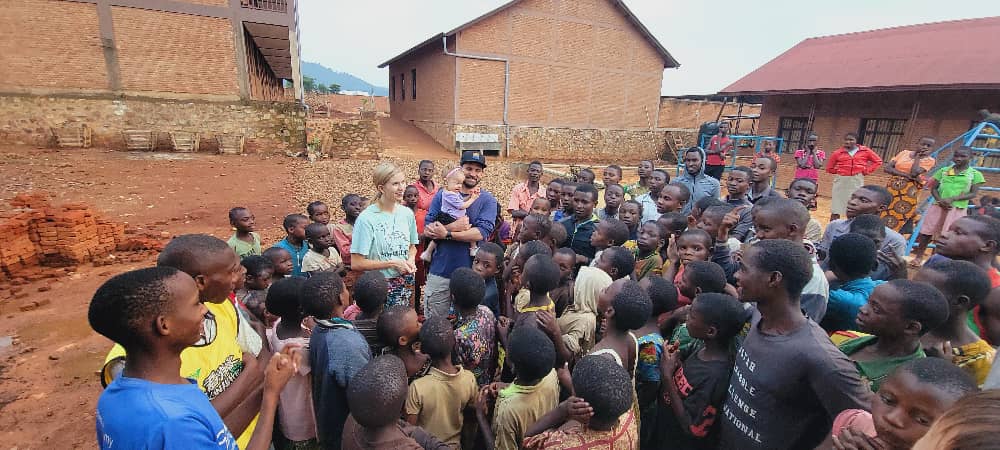
We started our trip visiting the village of Gisuru, which is in rural Burundi. My brother-in-law started Gisuru School for the Deaf to meet the needs of the uncommonly large Deaf population in Burundi.

We took Baby Bee down to visit a few times, and as you can see, everyone wanted a chance to meet the little deaf American baby! She was even given a name sign, which I’d been hoping for. We also got to chat with both of the students we sponsor.

Little Man’s not in this picture, but he spent many hours at the school, helping make bread. The school has a bakery as part of its trade program.

When we visited the capital city on the other side of the country, we got to visit Burundi’s other school for the deaf. Ephphatha School for the Deaf was started by in-laws a few decades ago, and now is it one of many projects that Ben’s other brother and his wife oversee. Currently, they are working on developing the school’s new campus.

These are boarding schools serving impoverished rural families. You can support the mission by sponsoring a student:
Discovery School

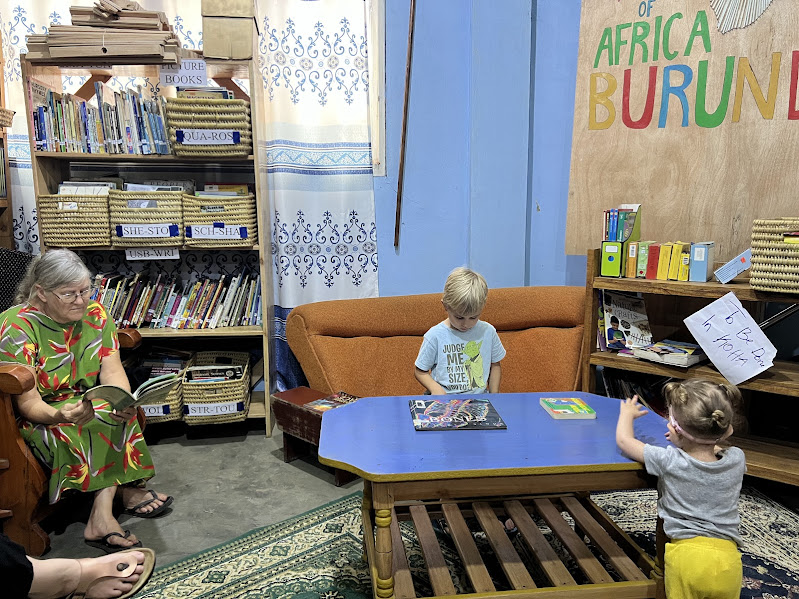
My sister-in-law runs an English-language private school in Bujumbura, Burundi. The school takes a critical-thinking approach to education, which sets them apart. One of their main goals is to equip Burundi’s future leadership to lead well and navigate the global marketplace effectively. They celebrated their first graduating class three years ago.

Discovery School is currently working on opening a branch near a rural hospital a few hours away. This school will help to attract and retain medical professionals, since many hospital employees have decided to leave their work due to lack of schools in the area.

Little Man loved the library–I believe it’s the biggest school library in the country!

See photos of the school and learn how you could get involved here:
Grandpa’s Boat

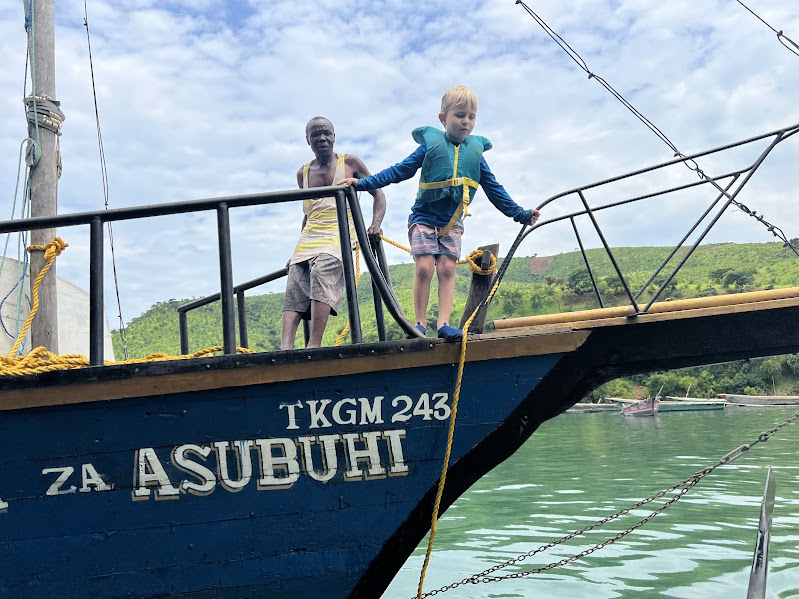
We stayed with Ben’s parents for a week. They have recently retired and moved into a lovely home overlooking Lake Tanganyika. Grandpa’s boat is a lot of fun for lake trips, but it’s also a ministry tool. He uses the boat to minister to communities all along the lake, some of which are impossible to reach by road.

While in Tanzania, we also enjoyed time with Ben’s childhood friends and the family of another of his brothers (yes, Ben has a LOT of brothers!), who does pastoral training etc. in Tanzania.
Kanura School for the Blind

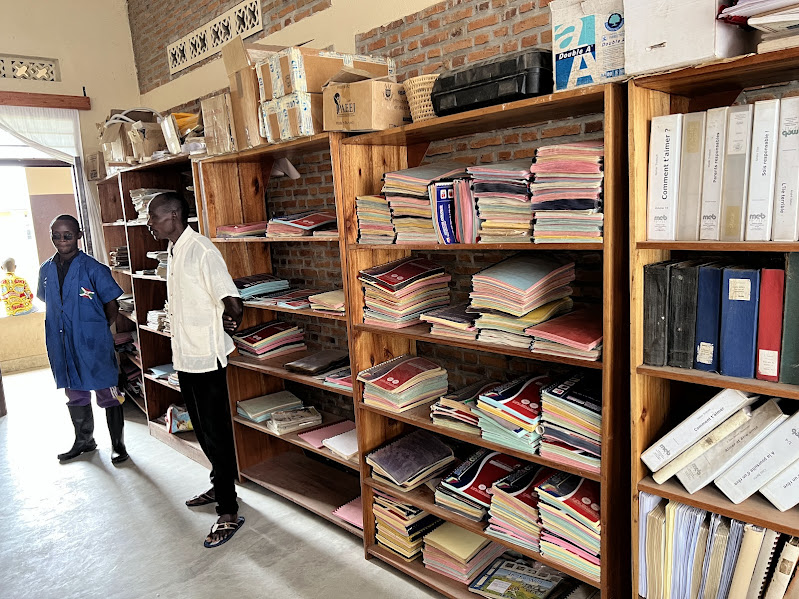
My father-in-law opened this school for the blind in the 1980s. It’s currently under the leadership of Burundian nationals, some of whom are blind graduates of this school. Kanura is also open to sighted children, which furthers the goal of destigmatizing disabilities.

It was cool to see how the school has adapted their curriculum to work for the students. Some of the classrooms displayed textured posters, like yarn and beans glued to graphics of the digestive system so kids can feel it it and understand as they learn. We also came across several students playing musical instruments, and I was excited to see their braille library, including braille printers and adaptive computer programs that allow them to create more literature.
The Lab

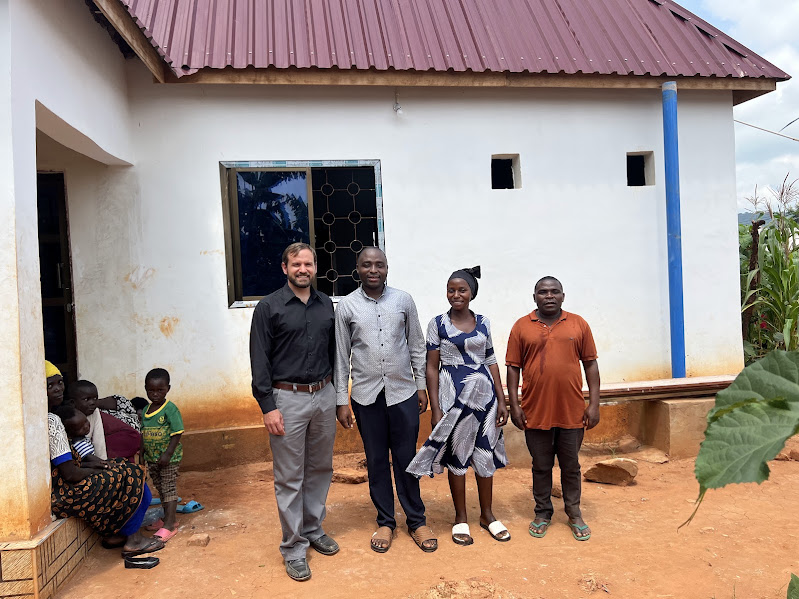
Ben built this lab in a rural village in Tanzania. His friend, also named Benjamin, is a pharmacist and will hopefully be opening his practice here within the next year. It was cool to see the finished building in person.

Besides visiting these projects and schools, we had a great time with family. Little Man got to hang out with seven of his cousins, and everyone loved playing with Baby Bee, too. She made a lot of progress and thrived in this new setting. It was a good month!

Screen Printing! Africa Day 9

Africa, Blog, Burundi, Expats, Expats and TCKs, International Travel

While in Burundi, East Africa visiting family last summer, my sister-in-law Joy taught me how to screen print!

I’m not sure if Burundi has screen printing shops (I imagine they exist, but probably not many), but this undertaking is an example of the ingenuity embodied by expats (and immigrants) around the world who want to recreate things from their home countries.

The table was built from scratch for the purpose of screen printing, and the other tools were ordered online and brought over by friends. We brought the shirts and the ink in our suitcases, and I’m glad the ink didn’t explode all over our clothes in the plane! At least it’s washable before it sets…

Joy’s vision was to create matching t-shirts for our huge Johnson family reunion, which would take place in Tanzania soon after. So she created a custom t-shirt design and, along with me, her three boys, and some of her employees, spent a couple of days printing about 35 shirts.

I need to stop taking on new hobbies, but this was really fun. I’m resisting the urge to get my own screen printing stuff.

We also ended up tie-dying the white shirts once everyone was together, but that is another fun and messy story for another day.

Please don’t ask me why we look like we’re waiting to be gathered up by a galactic starship in a sci fi B movie

Africa Day 1: 30 Hours in Transit

Africa Day 2: Crossing Burundi

Africa Day 3: A Dowry Ceremony

Africa Day 4: A Burundian Wedding

Africa Day 5: Gisuru School for the Deaf

Africa Day 6: How to Make Mudbricks

Africa Day 7: How to Make an African Coil Basket

Africa Day 8: Touring African Hospitals

Touring African Hospitals: Africa Day 8

Africa, Blog, Burundi, Expats, Expats and TCKs, International Travel, Uncategorized

Why move to the poorest country in the world when you could be living the American Dream?

That’s the big question people have for doctors in African hospitals who give up their high-earning practices back home to live and work in Burundi.

And there’s a good answer, too.

While we were in Burundi last summer, we had the chance to meet many people who have done this very thing.

Burundi, according to gross national income measurements, is the poorest country in the world.

That’s just an economic measure, of course. It’s not a measure of natural resources, happiness, overall wellbeing, social health, satisfaction with one’s life, etc. Money’s not everything. But it does impact access to healthcare as well as the ability of people to pursue higher education that would lead to more nationals becoming healthcare professionals.

The long drive across Burundi

With a lack of access to healthcare, particularly in rural regions, many people suffer devastation from easily-treated diseases like malaria.

We’ve seen this happen even to our own family members, who, as expats with cars and insurance for medical evacuation, have far more access to medical treatment.

If you’ve been following our story for a while, you may have read about Ben’s near-death experiences growing up in sub-Saharan Africa.

In a nutshell, Ben nearly died twice in high school. In both cases, both expat and national healthcare professionals were able to save his life.

Because of these experiences, Ben recognized the need for more expat doctors as well as more opportunities for Burundian nationals to become doctors.

So, he spent the next decade-plus of his life preparing to fill that need.

Part of the reason for our trip to Africa was to tour hospitals and visit with doctors–both expat and national– to ask questions and see where Ben might be able to fit in the future, when we’ve paid off the student loans and are in a position to do medical ministry overseas.

Playing on a African hospital’s compound. In the background, Ben meeting with doctors from this hospital.

Planning to move overseas is complicated.

Hoping to do medical work is even more so. There are a lot of questions to consider.

  • What hospital/clinic has needs we can fill?
  • What sending organization do we go with?
  • Where will our family fit in?
  • Do we work for an international NGO or a local-run institution?
  • How much change can we handle right off the bat?
  • Will our kids be OK here? (This is the one that really weighs on my mind)
Expat doctors live and work on this compound

We came away with a lot of great options. Still, we have a lot of unanswered questions. That’s OK, because we have a lot of unpaid debt, too, so we have some time to figure out the best fit for us when we’re able to go overseas.

We haven’t taken meaningful steps toward moving yet, and James 4:14-15 is always in the back of my head when I talk about our hopes for the future.

Still, we get asked all the time: Why? Why would you want to give up your life in America and move somewhere like Burundi?

The surface-level answer is that Ben is from there. It is home. It was the plan all along and the only reason that Ben had any interest in slogging through eleven years of medical training.

The deeper answer is that Jesus is worth it.

I’ve discovered that answer is a great testimony to our faith and God’s glory. People can argue with your apologetics. But not with your personal experience of Jesus’ worthiness and your willingness to press into that with your own life decisions.

Why struggle on with a difficult season in marriage? Jesus is worth it. Why become a foster parent? Jesus is worth it. Why forgive the family member who hurt you deeply? Jesus is worth it. Why choose a career walking alongside hurting people? Jesus is worth it.

Friends, I don’t know what choices you’re making or what seasons you’re walking through. But I pray that wherever you’re choosing obedience to Christ, you’ll have the chance to give his name glory by telling others that Jesus is worth it.

Africa Day 1: 30 Hours in Transit

Africa Day 2: Crossing Burundi

Africa Day 3: A Dowry Ceremony

Africa Day 4: A Burundian Wedding

Africa Day 5: Gisuru School for the Deaf

Africa Day 6: How to Make Mudbricks

Africa Day 7: How to Make an African Coil Basket

How to Make an African Coil Basket: Africa Day 7

Africa, Blog, Burundi, Expats, Expats and TCKs, International Travel, Third Culture Kids, Uncategorized

In Burundi, coil baskets are used for everything: food storage, transportation, traditional wedding gift wrap, even offering at church.

While I was vising my husband’s brother’s family in Burundi, I had the chance to learn how to make a coil basket from a local expert.

Mama Violette crafts these baskets using what my 11-year-old niece calls “goat rope” (rope made of fibers processed from sisal, a yucca-like plant), grass that grows near the river, and the plastic fiber from coffee sacks.

I asked Mama Violette where she learned to make these baskets. I expected a heartwarming answer about sitting long afternoons with her grandmother. However, she told me that she learned during her time in a refugee camp while Burundi was suffering through a civil war.

Burundian woman making a coil basket Gisuru, Burundi

She takes apart the sacks and straightens the fibers. Most of them are white, but colorful plastic is also available for designs. The durable, waterproof plastic replaces traditional organic materials in most baskets I saw.

Recycling at its finest!

Burundian woman making a coil basket Gisuru, Burundi
Mama Debo helped teach us to weave the baskets.

The basket starts with an inch or so of wrapping the plastic around the rope and grass. Coil the plastic-wrapped rope, thread the plastic through a needle, and stich the coil in place.

coil basket Gisuru, Burundi

The rest of the basket is pretty simple–keep wrapping, putting a stitch through the last round each time. I noticed that Mama Debo and Mama Violette placed one stich evenly though each wrap on the coil below.

Burundian woman teaching American woman to weave a coil basket Gisuru, Burundi

Making a basket takes a lot of time–a full day even for someone experienced. Later during our trip, I purchased a few small baskets from a roadside stand.

Can you guess how much one costs?

Two dollars. That’s all these women make from a day of hard work. That’s a typical wage for people in rural Burundi.

 coil basket Gisuru, Burundi

Mine wasn’t quite so neat, but it looked a lot better than my first attempt at a coil basket, which I tried to make with agave fibers from a plant in my yard. If you want to take a peek and laugh, visit this post.

coil basket Gisuru, Burundi

One of my nieces added some color to her basket. I was endlessly impressed by her creativity and knack for crafting. Aside from her new skill of basketry, she actually processes “goat rope” from sisal herself, dyes it using natural pigments she makes from nature, and weaves them into bracelets.

Burundian woman making a coil basket Gisuru, Burundi

Making a full basket would take a beginner like me days–even this little bit was the result of a couple of hours of work. So I decided to stop and turn it into a keychain.

Mama Violette helped me finish it off.

She and Mama Debo inspected my work, saying “Ni sawa.” I thought that meant I had not a fantastic job, but apparently it means. “That’s alright.” Hey, for a first attempt, I’ll take it!

Burundian woman making a coil basket Gisuru, Burundi

Now, I carry around this little souvenir on my keys wherever I go!

However, my main takeaway from this project wasn’t a physical item, or even a new skill.

Even though I couldn’t have a conversation with Mama Debo or Mama Violette, they were content to sit on the porch with me and communicate however we needed to, patiently helping me learn each step of basketmaking. Despite the many differences in our lifestyles, experiences, and backgrounds, they did not make me feel like an outsider.

Instead, we enjoyed a project together, connecting over a shared interest.

No matter the differences between us, we have more in common than we might think.

Africa Day 1: 30 Hours in Transit

Africa Day 2: Crossing Burundi

Africa Day 3: A Dowry Ceremony

Africa Day 4: A Burundian Wedding

Africa Day 5: Gisuru School for the Deaf

Africa Day 6: How to Make Mudbricks

How to Make Mudbricks Africa Style: Africa Day 6

Africa, Blog, Burundi, Expats, Expats and TCKs, International Travel, Uncategorized

This is a post about houses of sticks and houses of bricks and little pigs. But not the three little pigs.

Wildflowers arranged by my niece. She’s so creative.

Contrary to what The Gods Must be Crazy portrays, life in rural African is not simple or easy.

making mud bricks in Burundi

This reality was underscored for me when my brother-in-law and his family took us to see the place where their ministry keeps livestock.

Livestock in Burundi
Pig in Burundi
This little pig lives in a house made of sticks.

While we were having fun feeding goats and pigs, dozens of people were hard at work building bricks for the livestock project’s new building. The method used is basically the same as what you’d see in the Middle East or in pueblo ruins near my home in Arizona.

Making mud bricks
Making mudbricks at home in Arizona

I’ve made mudbricks before. The materials are cheap, but the labor is hard.

mud bricks in Burundi

Here’s how to make mudbricks Africa style:

  1. Saturate the dirt and mix it (usually with feet or a hoe) until it’s the right consistency.
  2. Fill brick molds with mud and smooth it.
  3. Wait for it to dry (a long, long time! I’ve heard it can take months).
  4. Stack the bricks into a kiln and fire them.
  5. Construct a building.
mud brick kiln Burundi

School was out for the summer, so there were a lot of kids helping. Summer vacation is not time for play in East Africa.

Animal pens in Africa

You might see women carrying bricks on their heads…I can’t imagine having that kind of strength!

African mud bricks

There’s a story missionaries like to tell about a doctor whose patient had thrown out his back. “How did it happen?” the doctor asked. “Oh, I was helping my wife get a load on her head,” the patient replied.

Child feeding goats

I don’t know if it’s true, but I wouldn’t be surprised. Burundi’s culture celebrates work ethic, and you don’t have to look far to see people who embody that value.

Me in Burundi

Africa Day 1: 30 Hours in Transit

Africa Day 2: Crossing Burundi

Africa Day 3: A Dowry Ceremony

Africa Day 4: A Burundian Wedding

Africa Day 5: Gisuru School for the Deaf

Gisuru School for the Deaf: Africa Day 5

Africa, Blog, Burundi, Expats, Expats and TCKs, International Travel

Listen. Can you hear it?

Most of us can hear something right now– I can hear traffic and the vacuum cleaner. And my dog getting annoyed at the vacuum cleaner.

Pineapple and coffee field at Gisuru School for the Deaf

In the United States, about 3% of the population is deaf. Many hearing-impaired people identify with Deaf culture and belong to a close-knit Deaf community.

But Burundi doesn’t have a thriving Deaf community. In fact, most people don’t have access to sign language, much less other accommodations.

This is a big problem, since deafness is common in the country. Many Burundians are born Deaf, while others become Deaf from improper administration of medicine or through illness.

Ben with a huge mural of Burundi. Gisuru School for the Deaf is in the eastern Ruyigi region.

To address this, Ben’s father and grandfather established the country’s first Deaf school in Bujumbura decades ago.

Kirundi word of the day: Ishuli (school).

But what about those in rural areas? What about those too far from Bujumbura?

Me with one of the social studies murals on the cafeteria walls. Can you find Burundi on the map?

My brother-in-law Danny moved far out into the hills to start another Deaf school on the opposite side of Burundi. We were able to tour the boarding school during the summer break and meet a few students.

We even got to meet the student we sponsor!

He looks a bit uncomfortable in the photo, but in real life he was super excited to have his photo taken and signed that it was “Beautiful, BEAUTIFUL!”

Ben and I with the student we sponsor and his father. The traveled an hour to meet us and we were so thankful!

Meeting this student was amazing! We have been praying for this boy for five years and have had his photo on our fridge and have received drawings from him, and later letters when he learned to communicate. Now we got to see he and his father in person!

Students learn to cook in this kitchen at Gisuru School for the Deaf.

American Sign Language is derived from French sign language. I learned ASL in college and the two languages are close enough that I could have a conversation with this student as well as others we met during our time in Gisuru.

You can read more about that –and about Gisuru School for the Deaf– on World Footprints.

Africa Day 1: 30 Hours in Transit

Africa Day 2: Crossing Burundi

Africa Day 3: A Dowry Ceremony

Africa Day 4: A Burundian Wedding

A Burundi Wedding: Africa Day 4

Africa, Blog, Burundi, International Travel, Uncategorized

What would you do if you were asked to play a role in the wedding of a stranger? In another country? Where you don’t speak the local language?

.maxbutton { position: relative; text-decoration: none; display: inline-block; vertical-align: middle; width: 160px; height: 50px; border: 2px solid #c14e34; border-radius: 4px 4px 4px 4px; background-color: rgba(216, 72, 49, 0.9); -webkit-box-shadow: 0px 0px 2px 0px #333333; -moz-box-shadow: 0px 0px 2px 0px #333333; box-shadow: 0px 0px 2px 0px #333333; } .maxbutton:hover { border-color: #c94926; background-color: white; -webkit-box-shadow: 0px 0px 2px 0px #333333; -moz-box-shadow: 0px 0px 2px 0px #333333; box-shadow: 0px 0px 2px 0px #333333; } .maxbutton .mb-text { color: #ffffff; font-family: Tahoma; font-size: 15px; text-align: center; font-style: normal; font-weight: normal; line-height: 1em; box-sizing: border-box; display: block; background-color: unset; position: relative; padding: 18px 0px 0px 0px; } .maxbutton:hover .mb-text { color: #04000a; } More Africa Stories!

I recently wrote about attending a dowry ceremony in Burundi. My whole family was invited to attend the wedding the next day, even though we did not know the couple and were visiting from the U.S.

Yes, we did color coordinate our clothes. Photo credit: Danny J.

The wedding took place in a the couple’s church, a beautiful brick building shaped like a heart. It included performances by the choir and speeches with advice to the bride and groom. My family doesn’t speak Kirundi, but my sister-in-law whispered an English translation to us. The service also had a sign language interpreter for Deaf guests, and I could understand most of that.

Kirundi word of the day: Kaze (Welcome)

The couple prepares to be presented as man and wife.

According to the local tradition, asking someone to act as best man and matron of honor is also a request for lifelong mentorship and marriage counseling. The older friends who stood in this role for the newlyweds have a reputation for a stable, loving marriage despite challenging life circumstances.

Jambo! Jambo bwana! Habari gani? Mzuri sana! Wageni wakaribishwa, Burundi yetu hakuna matata.

Hospitality is a strong value in Burundi, and we were offered seats of honor with the groom’s family during the reception. This accomplished the need to have someone stand in for the groom’s extended family members who couldn’t make it as well as the need to express a welcome to out-of-town guests.

I had another role, too. My sister-in-law made the wedding cake, and I had the job of walking up the aisle to deliver it to the couple!

A toast with Fanta Orange

It was quite an experience to see how Burundian weddings are done and to be able to appreciate the meaningful customs they observe. Getting invited to anyone’s wedding is an honor, and I always love having the chance to witness one of the most important moments of a couple’s life.

To read more about this wedding, visit World Footprints.

Africa Day 1: 30 Hours in Transit

Africa Day 2: Crossing Burundi

Africa Day 3: A Dowry Ceremony

Africa Day 5: Gisuru School for the Deaf

30 Hours in Transit: Africa Day 1

Africa, Blog, Burundi, Expats, Expats and TCKs, International Travel, Third Culture Kids, Uncategorized

We’re in Africa! We’ve been looking forward to this trip for nine years, and we’re finally here.

Kirundi word of the day: Amahoro (hello)

Fun fact: It takes 30 hours to get from Glendale, Arizona to Bujumbura, Burundi.

Actually, it should take longer than that if you schedule long enough layovers– I don’t recommend sprinting across Chicago O’Hare Airport toting six carryon bags and an angry preschooler to catch a connecting flight.

Little Man was happy for most of the trip 🙂

If you’ve been following for a while, you might remember a previous post announcing that we’d be in Kenya for six weeks last spring. Well, that didn’t work out. But the Africa vacation to Burundi and Tanzania that we’re taking now is turning out to be much better than trip to work in the hospital would have been!

Helping with the luggage

Ben was born in Burundi and lived here until he was four, when his family was displaced to Tanzania during the war. In fact, he lived in the house where I’m writing this– his father built it on the family’s mission station 30 years ago and now his oldest brother lives here. But being born in Burundi gives Ben more than just a passport that makes border agents do a double-take. It’s also given him a lifelong connection to a place that will always feel like home.

It took three hours to get through the Bujumbura airport

After our long trip to Bujumbura, Burundi, we finally managed to extricate ourselves from the airport to find the people who would pick us up. To my joy, I saw eight family members waiting for us in the parking lot, where they had spent hours so they could be sure to greet us! We haven’t seen some of the nephews in six years, so our drive to their home a few miles away was a happy reunion.

Bujumbura, Burundi

Keep following to hear about the rest of our Africa adventures! We’ll be here for a whole month traveling between several locations.

You can also sign up for my newsletter in the sidebar to get new posts sent monthly to your inbox.

Africa Day 1: 30 Hours in Transit

Africa Day 2: Crossing Burundi

Africa Day 3: A Dowry Ceremony

Africa Day 4: A Burundian Wedding

Africa Day 5: Gisuru School for the Deaf

Coming Full Circle in Africa

Africa, Blog, Expats, Expats and TCKs, International Travel, Third Culture Kids

I’ve been spending a lot of time thinking about Africa. For one thing, I’m writing a novel about an American kid in a Kenyan boarding school. For another, we’re planning on taking a trip to East Africa in the spring. Ben is allowed a residency rotation overseas, and obviously, he picked going home!

Ben near Lake Tanganyika in his hometown

It’s hard to believe we haven’t been to Africa since 2013! For someone like Ben, who grew up there, eight years is a long, long time to stay away. We were the only ones to miss the last family reunion, thanks to Ben’s med school schedule. And when you have 35 people in your immediate family (hope I added that right), living in six countries across three continents, it’s quite a bummer to mess up an opportunity to get a family photo where nobody’s photoshopped in.

Visiting a Burundian national park. Ben’s grandfather helped to start it after WWII.

Fortunately for Ben, even though it’s been a long time since he’s used Swahili on the daily, he does have frequent opportunities to use it at work. There are many people from Congo in our city, and whenever someone shows up to the hospital, Ben is able to conduct exams in a language they are more comfortable using. I, on the other hand, am getting pretty rusty. You know, rusty on the hundred or so words I actually know in Swahili. Looks like I have some work to do if I want to be able to practice any conversational skills at all while we’re there!

Swinging on vines – not just in movies!

We’re excited to go to Africa, introduce our son to the continent, and revisit the places Ben grew up. But one of the coolest things about this trip is that Ben will get to work at the very hospital where his life was saved, where he realized his calling into medicine. Over a decade ago, he was laying in one of the beds with a IV in his arm, recovering from spinal meningitis and watching the staff go about their daily tasks. He knew he wanted to use the second chance at life to pour into patients, just like those doctors and nurses. And now he gets to go back to the same hospital and do just that.

Lake Nakuru National Park in Kenya

Isn’t it amazing how God redeems our circumstances? Sometimes we never see how he does it, but other times life comes back full-circle and we can see how to worst days of our lives change us into the people we are supposed to be.

Just for fun, here are some of my favorite photos from our 2013 visit to Burundi, Kenya, and Tanzania.